



High-Purity Sputtering Targets: Procurement Guide
Learn how to source high-purity sputtering targets for semiconductor and advanced packaging applications, from purity and traceability to supplier qualification.
Learn how to source high-purity sputtering targets for semiconductor and advanced packaging applications, from purity and traceability to supplier qualification.

Explore Detroit's industrial real estate market in 2026 - vacancy and rent data, manufacturing demand, supply chain effects, submarkets, and key risks.
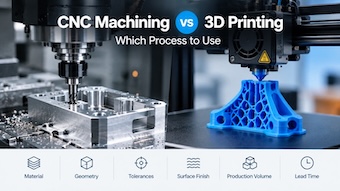
CNC machining and 3D printing can both produce prototypes, functional components, and finished parts, but they solve different manufacturing problems. Choosing between them is less about which technology is “better” and more about what a particular part requires.
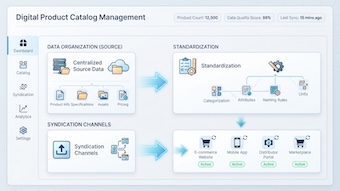
For manufacturers, a growing product catalog can create a problem that has little to do with the number of products themselves.
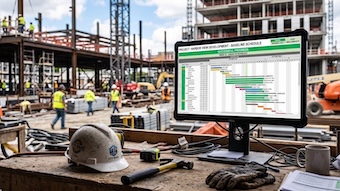
A construction project rarely falls behind because of one massive mistake. More often, it's a dozen small problems that start stacking up. A material arrives late. A subcontractor isn't ready.
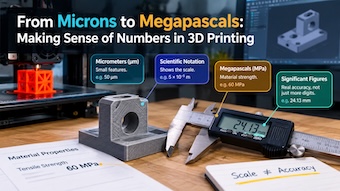
Spend an hour on a 3D-printing project and you'll bounce between wildly different scales without even noticing. One minute you're squinting at a feature that's a fraction of a millimeter thick, the next you're pulling a material property off a datasheet in megapascals...
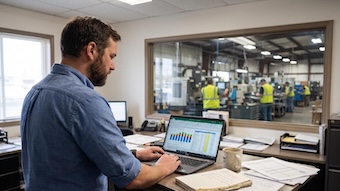
A production planner reviews real-time demand data alongside active manufacturing output.
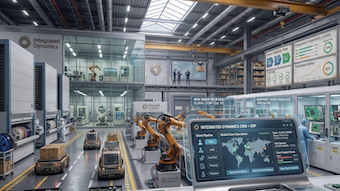
Choosing a CRM for your manufacturing business comes down to six things: multi-contact account management, pipeline stages that match your quote-to-order cycle, order history visibility, real-time ERP or accounting integration, workflow automation, and customizable fields.
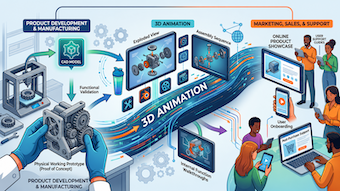
A working prototype answers one question conclusively: can this product exist? Hold the 3D-printed sample, watch the mechanism actually move, confirm the parts fit — the proof is in your hand.
Legacy systems rarely fail loudly. They limp along for years, then collapse during a Black Friday traffic spike or a regulatory audit — the worst possible moment. By 2026, "modernization" stopped being a slide in someone's strategy deck and became a survival question.
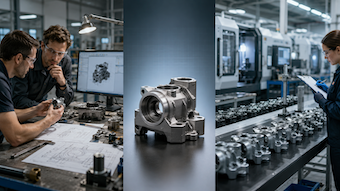
Moving from prototype to production is the process of turning a tested idea into a repeatable, cost-controlled, and quality-approved manufacturing workflow. A prototype can look convincing and still fail when hundreds or thousands of parts need to be made consistently.

Take a stroll through any trade show hall these days and it will be obvious that boring banners don't capture attention. Stoppers visit bright, clean, easy-to-explore booths.